What's Next: Taking These Patterns Home
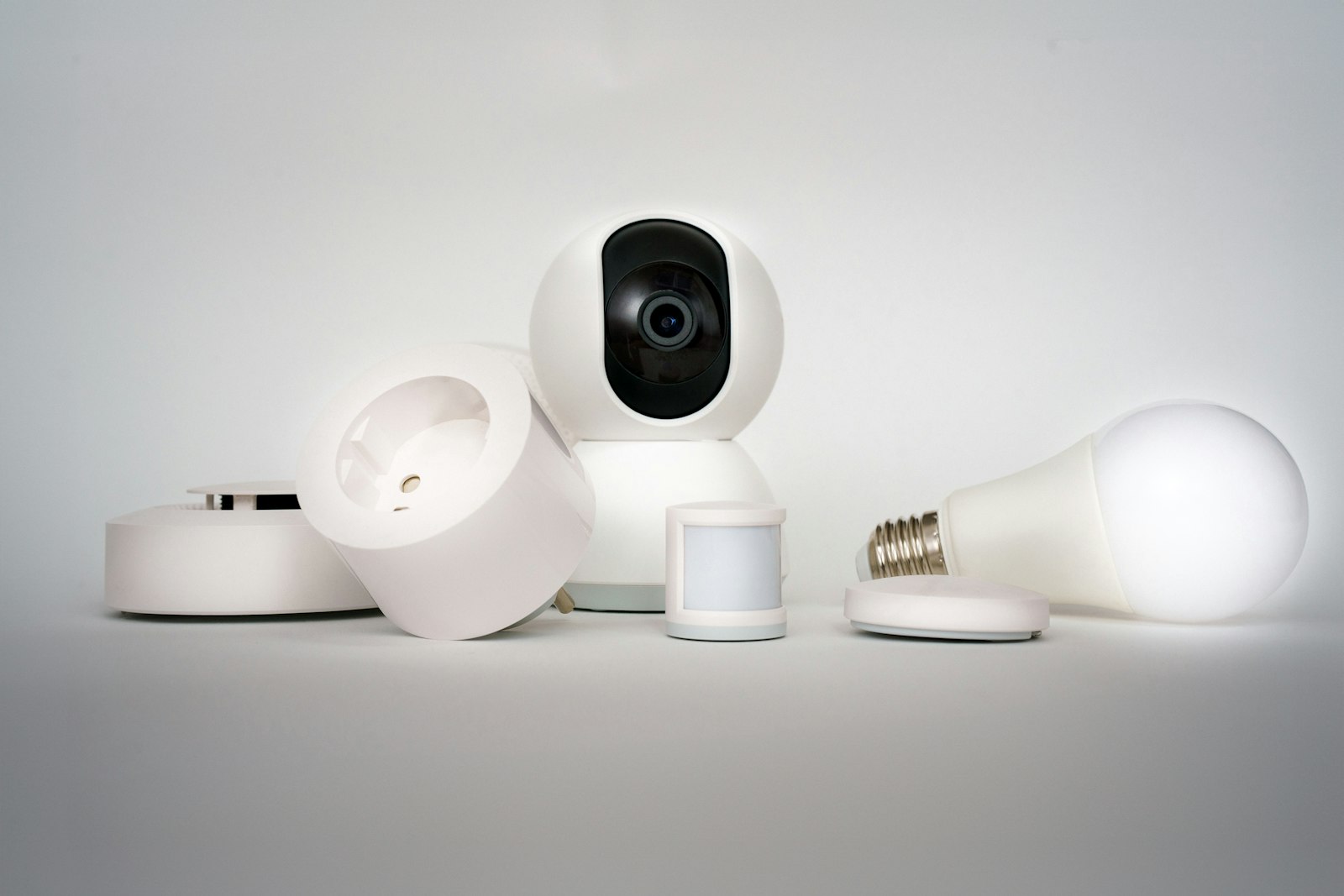
Last time I wrote about The Lean-Agile MVP and the gap between "we validated this idea" and "the thing we shipped still traces back to that validation." This is the last article in the series, and I want to open it the same honest way I opened the smart-home mention back in the overview: there is no working prototype yet. What follows is direction, not delivery. If you're looking for a shipped product at the end of this post, it isn't here. If you're looking for how I think about a problem before I've written a line of code for it, that's what this is.
Why Physical Devices, and Why Now
Every project in this series so far has been software running on a server or in a browser. A smart home is a different kind of system — it lives on a local network, talks to hardware from a dozen vendors that don't agree on a protocol, and has to keep working when the internet doesn't. That's a harder environment than anything I've described so far, which is exactly why I think it's worth sketching out in public before I've solved it.
The pull toward it isn't nostalgia for home automation as a hobby — I've had smart bulbs and a thermostat for years like everyone else. It's that the failure modes I keep seeing in physical smart home setups are the same failure modes I've spent this whole series writing about in software: a vendor's cloud goes down and your lights stop responding to a switch that's sitting three feet away from them. A device gets replaced and every automation that referenced it by name silently breaks. Nobody can tell you, after the fact, why the thermostat did what it did at 2 a.m. That's not a hardware problem. That's the same discipline gap — event-driven, local-first, vendor-agnostic — that the rest of this series has been about, just wearing a different costume.
The Patterns I'd Actually Carry Over
I don't have a system to describe yet, but I do have a short list of things I already know I'd insist on, because I've watched what happens when a SaaS product skips them:
- Event-driven, not polling. The same reason CQRS and domain events show up throughout Prompt Workbench — a state change should be a fact that happened, not a value some other component has to keep asking about. A light switching on is an event; a dashboard rendering "on" is a projection of that event, not a source of truth in its own right.
- Local-first. The Golden Thread idea from The Lean-Agile MVP — keep the name, don't translate it at every handoff — has a physical-world analogue here: keep control local, don't translate it through a cloud round-trip. A light switch should work when the router is down, the same way a local-first app should work when the network is down.
- Vendor-agnostic by design, not by accident. The AI Router I built for Prompt Workbench routes across five model providers because I got tired of being locked to one vendor's outages and pricing changes. A smart home built the same way would need a comparable abstraction over Zigbee, Z-Wave, Matter, and whatever proprietary protocol shows up next — not a bet on one winning.
flowchart TD
    subgraph saas["Proven — SaaS / extension-suite pattern"]
        direction TD
        Event["Domain event\n(CQRS, not polling)"] --> Local["Local sidecar\noffline-first"]
        Local --> Router["AI Router\nvendor-agnostic across 5 providers"]
    end

    subgraph home["Speculative — smart-home analogue (no prototype yet)"]
        direction TD
        Device["Device state change\nas an event, not polled"] --> Hub["Local hub/switch\nworks when the router is down"]
        Hub --> Protocol["Protocol abstraction?\nZigbee / Z-Wave / Matter / proprietary"]
    end
I'm confident in that list because it's just the same instincts from the rest of this series, applied somewhere new. I'm considerably less confident about the parts that come after it.
The Open Questions I Don't Have Answers To Yet
This is the part I'd rather be honest about than paper over with false certainty:
- What does the Golden Thread even look like for a physical device — where's the equivalent of "the same name from customer interview to production event log" when the thing at the end of the chain is a relay switching on a compressor?
- How much of the offline-first architecture I built for the VS Codium extension suite — a local sidecar, a router with an offline and an online path — actually transfers to a device that has real hardware constraints, not just a network that might be slow?
- Is this a product, or is it a much smaller thing — a personal project I write about occasionally because the patterns are interesting, the way plenty of engineers keep a home lab going without ever intending to sell it?
I don't know yet, and I'd rather pose those questions honestly than pretend I've already answered them for the sake of a tidier ending.
Closing the Series
Seven articles ago, I opened with an overview: a tour of the AI-native SaaS apps, the VS Codium extension suite, the DSL tooling that started it, two books in progress, and this smart-home idea as a "more on this later." Here's the arc that followed:
- Overview — the introduction to all of it, written for anyone weighing me as a freelance architect or a full-time hire.
- AI-Native SaaS Deep Dive — Prompt Workbench's CQRS/DDD architecture and the multi-provider AI router, born out of the PromptOS research.
- VS Codium Extension Suite Deep Dive — Prompt Studio, Infographic Studio, Compliance Studio, and the shared platform layer that makes offline-first non-negotiable.
- DSL Tooling Deep Dive — LeanAgileScript, the Langium-based language extension that started the whole extension suite.
- PromptOS Deep Dive — the 23-document practitioner reference on prompt engineering, built alongside the AI router it documents.
- Lean-Agile MVP Deep Dive — the founder/technical-lead field manual, and the Golden Thread discipline I now can't work without.
- This one — what's next, honestly, with no prototype to hide behind.
The throughline across all seven, if there's one thing I'd want a reader to take away, is that I treat architecture as a discipline you practice on real, shipping software — not a slide deck you produce once and never revisit. That's true of the SaaS apps, it's true of both books, and it's the same instinct pulling me toward a smart-home project I haven't built yet.
If any of this resonates with a project you're hiring for — an architect who can take an idea from a whiteboard to a working product and write down what he learns along the way — I'd like to hear from you. And if you've tried to bring local-first, vendor-agnostic discipline into a physical-device project yourself, I'd genuinely like to know what broke first. Thanks for following along this far — it's been a good series to write.
Want to know more?
Interested in "What's Next: Taking These Patterns Home"? Leave your details and I'll follow up with more information.